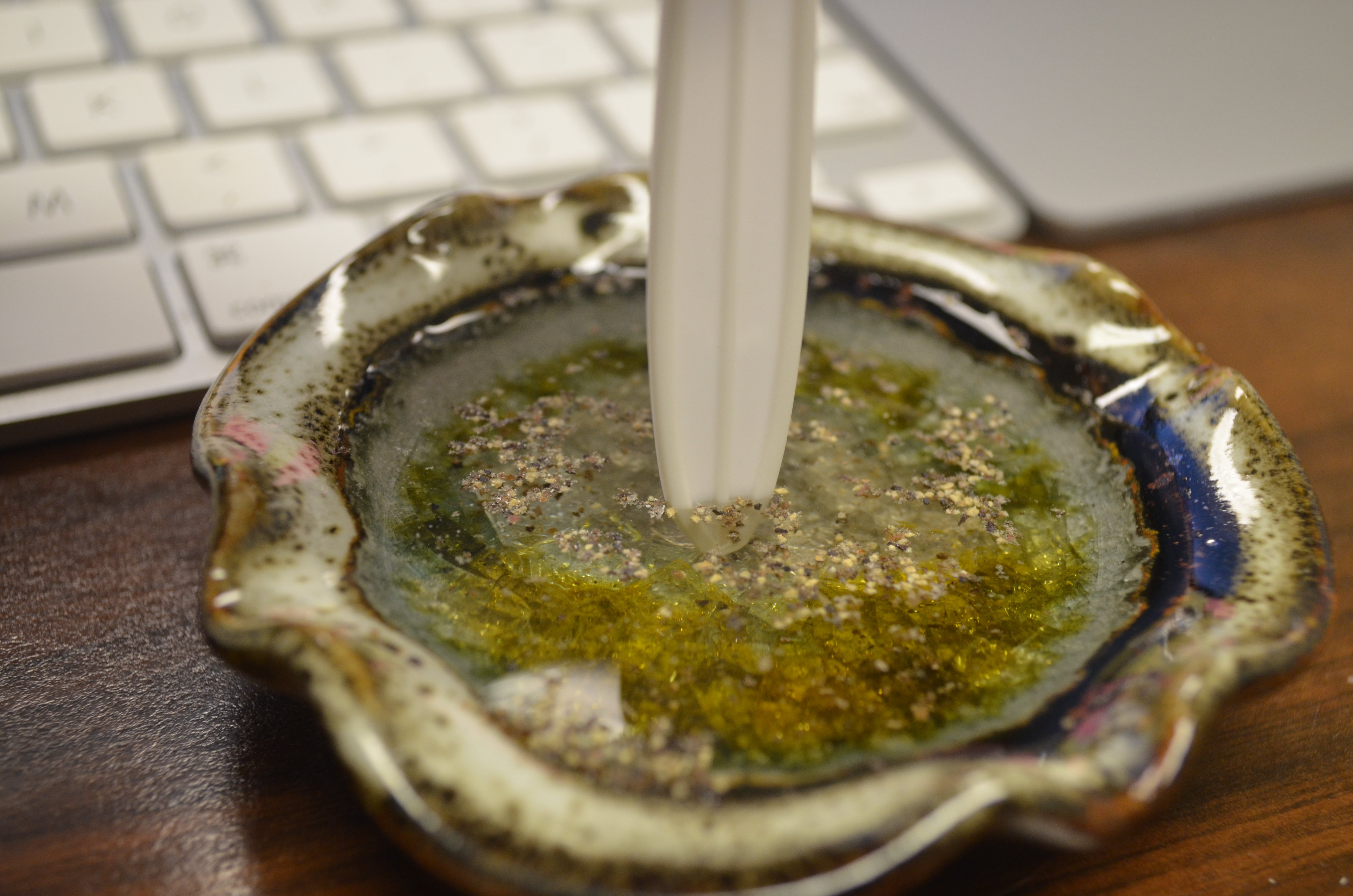
What do an Irish music technology developer, a British manufacturer of arcade and retro-style furniture, and a dance bar in San Francisco have in common? Given a million guesses, I’d never have thought of this:

What do an Irish music technology developer, a British manufacturer of arcade and retro-style furniture, and a dance bar in San Francisco have in common? Given a million guesses, I’d never have thought of this:
Topics: Surface Tension Measurement, Surface Tension, Liquid Properties
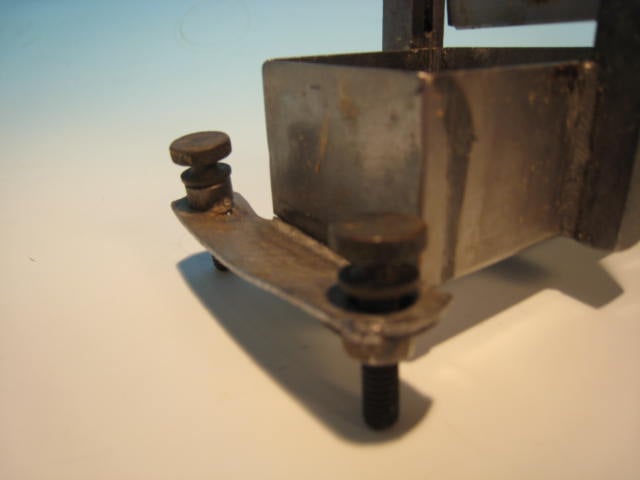
Which looks more durable to you?
The value of a Bostwick Consistometer is that it’s easy to use, which makes it simple to do repeatable testing. The Consistometer is made of stainless steel. One would think that this means a long and useful life. However, as I regularly discover, the real world often defies theory.
A Consistometer’s value is diminished if its leveling plate and screws get bent out of alignment. The story that follows tells how people in the real world handle, or mishandle, this instrument, and what can be done to save it.
Topics: Abuse Protection Option (Consistometer), Bostwick Consistometer, Consistency, Liquid Properties
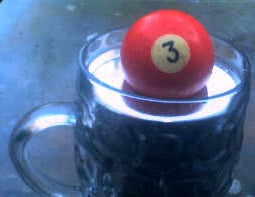
I used to think that liquids were pretty simple things. Is that what you think too?
Not so fast. Let’s take a look at three properties of liquids and see if we change our view.
Topics: Newtonian Fluid, Viscometers, Viscosity, Bostwick Consistometer, Consistency, duNouy Rings, Surface Tension Measurement, Surface Tension, Liquid Properties

Since I joined CSC Scientific in July 2013, I’ve been on a steep learning curve. You see, I’ve never been much of a science person. There was even one particular chemistry class in high school used to give me migraine headaches - routinely.
Having no real background in the sciences means that I’ve had a lot to learn since I joined a company that sells scientific testing equipment. Maybe you’re nodding in sympathy with me right now. Many of our clients – that is, the people doing the purchasing on behalf of their company – are not scientists and don’t have a thorough knowledge of the scientific principles behind the products they’re told to buy.
Topics: Newtonian Fluid, "The Basics", Viscometers, Viscosity

Sieve testing, as I have stated many times, is the Cinderella of particle size analysis because it delivers more value than expected from something that’s so easy to use and relatively inexpensive. However, the problem with standard sieving techniques using wire mesh sieves is that they begin to exhibit accuracy problems in the lower micron sizes.
Topics: Sieve Shakers, "Ask Art", Sonic Sifter, Micron-Sized Particles, Particle Size Analysis, Sieve Testing, Sieving Process

Automatic digital tensiometers are expensive - three to four times more so than a high-precision manual tensiometer. We hope to clearly depict when an automatic digital tensiometer is not merely nice to have, but essential.
Topics: Wilhelmy Plates, Automatic Digital Tensiometer, Automatic Surface Tension Measurment, "Ask Art", duNouy Rings, Tensiometer, Surface Tension Measurement, Surface Tension, Liquid Properties
Every now and then I’ve had to calculate the results of a sieve test: I’d get the sieves and sample loaded on the shaker, run the shaker, then realize I’d have to start over because I forgot to get the empty weight of each sieve. Or I’d have to carefully brush out the sample onto a balance.
Topics: Sieve Testing, Sieving Process, Sieve Analysis

Chapter One:
Jim’s life was dull. So, so dull. He spent his days surrounded by piles of sieves – his glamorous job was to calculate the ratio of particles left in the sieves of each stack after a sample of his company’s product was run through the stack using a sieve shaker. It was a job much like the one his cousin Hiram had, although he seemed to remember hearing that Hiram had found an easier way to do it.
Topics: Particle Size Analysis, Sieve Testing, Sieve Analysis
A question we get a lot is:
Of course, the answer is often “it depends”, and the method does depend on the chemical and physical composition of the product. There are several methods used to determine moisture content: Loss-on-Drying (also known as Weight Loss), Karl Fischer, NIR, and Radio Frequency.
Topics: "Ask Art", Moisture Analysis, Karl Fischer, CSC Digital Moisture Balance, Loss-On-Drying, Moisture
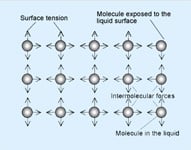
One of the ways to describe surface tension in fluids is: the property of a liquid’s surface that resists force. It serves as a barrier to foreign materials and holds the liquid together. This ever-present property is caused by unbalanced forces on surface molecules that pull toward the main part of the liquid.
Topics: Wilhelmy Plates, Automatic Digital Tensiometer, Automatic Surface Tension Measurment, duNouy Rings, Tensiometer, Surface Tension Measurement, Surface Tension, Interfacial Tensiometer, Fisher Tensiomat, Liquid Properties, Digital tensiometer
CSC Scientific Company, Inc
2799-C Merrilee Drive
Fairfax VA, 22031
800-621-4778
703-280-5142 (fax)
csc@cscscientific.com
No part of this page or any other page in this site may be copied or reproduced in any way.