The first question is, "What are Liquid Properties?" Are they some kind of underwater real estate?
No, Liquid Properties are Not Underwater Real Estate. Rather, they are the characteristics of flowing substances or fluids. We concentrate on understanding and measuring five of these:
1. Surface Tension
2. Consistency
3. Viscosity
4. Contact Angle
5. Density
You have experienced each in your daily lives. Here are some examples.
Have You Ever Noticed? Liquid Properties Sneaking Around in Daily Life
Here are a few everyday encounters that look ordinary until the liquid decides to reveal its personality:
A. Why do you reach for hot, soapy water when you wash your hands?
B. Why is one bottle of ketchup politely cooperative while another behaves like it needs a formal invitation?
C. Why does a squeaky door suddenly regain its dignity after a few drops of 2-in-1 oil on the hinge?
D. Why does rain bead up on a clean, waxed car, but spread out on a dirty one?
E. And why is a liter of wine lighter than a liter of water, despite wine’s best efforts to feel more substantial?
Each of these small domestic mysteries can be traced to one specific liquid property from our list of five.
The Reasons Why
The science connected with each of these examples explains why they behave this way.
Hot Soapy Water

Thick Ketchup
Ketchup offers a remarkably practical lesson in consistency. The thicker it is, the more confidently it stays put on a hamburger or a pile of fries. When it is thinner, it spreads at once or escapes over the edge with very little encouragement. Different brands respond to gravity with noticeably different levels of enthusiasm: some pour out eagerly and become drippy, while others hold their ground with greater composure. That difference comes down to the liquid’s consistency.
What the Bottle Problem and the Squeaky Door Fix Have in Common
 Turn on a faucet or tip over a glass, and a liquid obligingly flows along as though this were the easiest thing in the world. But inside the liquid, there is more going on than meets the eye. Its molecules are sliding past one another, and that motion creates friction. Sometimes the movement is smooth and cooperative, as with the oil that slips neatly into both sides of a door hinge. Other times, the liquid behaves more like stubborn ketchup, which must be persuaded, and occasionally thumped into action, before it will leave the bottle with any sense of purpose. That internal resistance to flow is what we call VISCOSITY.
The Bubbles Don’t Just Happen
When you wax your car, you do this strange thing of lowering the surface energy of the  hood, fender and the top. The water then crushes itself up and forms drops. A dirty car has high surface energy and pulls down or spreads out the water. This peculiar interaction is known as contact angle.
What Determines that a Liter of Wine is Lighter than a Liter of Water?
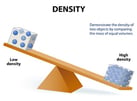
A pint of one liquid can outweigh a pint of another, which seems a bit unfair until science explains itself. That little plot twist is brought to you by another liquid property.
Depending on how hefty those pesky molecules are and how snugly they crowd together, different liquids in identical containers can weigh quite different amounts. That, ladies and gentlemen, is DENSITY.
So Much for Defining the Pieces of Liquid Properties
We hope this brisk tour of liquid behavior has given you a respectable grasp of these five slippery characters—and perhaps even stirred a little curiosity about surface tension, consistency, viscosity, contact angle, and density.
The Second Question: Why Should Anyone Care?
So far, we have been cheerfully naming the players. Naturally, some of you may now be asking, “Fine—but why should I care?” A fair question.
The answer is that liquid properties are not just scientific parlor tricks. They quietly meddle in manufacturing, packaging, cleanliness, product performance, and even whether your ketchup behaves like a civilized condiment. The examples below show where measuring and controlling these properties matters—and why industry pays attention.
Detergent Production
For soap and detergent manufacturers, surface tension is no small matter. A laundry detergent has one job: help remove dirt from clothing without acting like it has somewhere better to be. To do that, it must reduce the surface tension of the water so the wash can mix properly with stains and foreign matter and carry them away.
Condiments
The maker of ketchup, mustard, or mayonnaise faces two separate but equally sticky concerns. First, there is what I like to call apparent thickness—better known as consistency—which determines how well the product flows. Second, there is packaging. If the product is destined for a squeeze bottle, viscosity becomes a major character in the drama, deciding whether it pours obediently or exits like it is protesting management.
Processing Plant Design
The design of liquid processing plants—and the piping systems that keep everything moving—is very much at the mercy of viscosity. Some liquids cooperate. Others behave as though every bend in the pipe is a personal insult. In either case, viscosity can mean the difference between a process that runs smoothly and one that becomes an expensive lesson.
Surface Contamination
Where surface cleanliness is critical, as in the production of silicon computer chips, guessing is not an acceptable quality-control method. A practical way to test cleanliness is to measure the contact angle of a drop of water on the silicon surface. That angle directly correlates with how clean the surface really is, which is rather useful when “probably clean enough” is not the standard.
Wine Making
In wine production, fermentation changes the amount of sugar present, which in turn changes the wine’s density. That shift correlates with the progress of the wine’s development, giving producers a quick and easy way to see how things are going. So yes, density is another liquid property doing important work behind the scenes—quietly, efficiently, and without demanding applause.
All Five Properties Clock In for Poster Paint
Now for a product-development example in which all five liquid properties show up for work rather than merely loitering in the glossary.
A poster paint manufacturer has to make paint behave on a whole cast of surfaces. Coated paper, plastics, and polymers all have their own opinions about how paint ought to spread, cling, or misbehave. To keep everyone reasonably happy, several formulations are usually required, each with its own particular balance of surface tension, consistency, viscosity, contact angle, and density.
One useful clue is the contact angle of a drop of paint on a given surface. That angle helps reveal whether the paint will settle in nicely or make a break for it and run off. Once the formula behaves properly on that specific substrate, the resulting surface tension measurement—mercifully independent of the substrate—becomes useful for setting up and controlling production.
A new formulation may also bring along a different viscosity, which means spray nozzles and other application equipment may need a few adjustments before they stop sulking. And if the density changes, packaging and coverage specifications may have to change as well. In other words, even poster paint turns out to be a full-employment program for liquid properties.
These, of course, are only a few glimpses into the surprisingly crowded world in which liquid properties quietly run the show for liquid-based products.
The Instruments That Keep Liquid Properties Honest
Since each liquid property has its own peculiar habits, each also requires its own style of interrogation. One instrument cannot do the whole job unless it is in the mood to be wildly unqualified. The basic cast of characters is as follows:
-
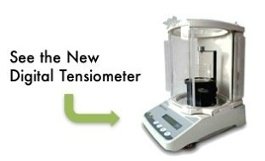
**Surface Tension** – This is measured with a **Tensiometer**, which determines how much force is required to break through the liquid’s surface.
-
**Consistency** – Here, a sample is placed in a container of fixed volume. The container is then opened, and the time it takes gravity to pull the sample a fixed distance is measured. This instrument is called a **Consistometer**.
-
**Viscosity** – The internal friction between molecules in a flowing liquid is measured with a class of instruments known as **Viscometers**.
-
**Contact Angle** – **Contact angle instruments**, sometimes called **Goniometers**, measure the angle formed between a drop of liquid and the surface beneath it.
-
**Density** – Density is determined by comparing the weight of a given volume of the test sample with the weight of the same volume of a standard liquid.
Naturally, each of these instrument families comes in numerous variations, models, and techniques—because no respectable field of measurement would be complete without a healthy assortment of specialized gadgets.
Yes, the Measurement of Liquid Properties is Important.
The following list of industries that depend on the measurement of one or more of these liquid properties illustrates their importance.
| * Adhesives | * Beverage | * Biomedical | * Building Materials |
| * Chemical | * Construction | * Cosmetic | * Electric Power |
| * Food Production | * Paint & Coatings | * Petroleum | * Pharmaceutical |
I hope this cheerful sermon on liquid properties has been worth your time, and that it has firmly established that liquid properties are something more useful than underwater real estate. If you know colleagues who would enjoy this little excursion into flowing behavior, please do send it along.
Thanks for your attention.
Still flabbergasted, as usual, by these measurement puzzles,
Cho
P.S. If you would like to subscribe to these exposés, rants, raves, and ramblings, simply enter your email address in the box just to the right of the title. It is a remarkably low-effort way to invite more of this into your life.