As is often the case in the measurement world, what looks simple at first glance turns out to be simple…yes, but not quite that simple. Moisture measurement is a prime example. Consider this:
Understanding how volatile compounds interfere with loss on drying measurements is essential if you want moisture results that reflect actual water content—not a creative blend of water plus whatever else decided to evaporate that day.
Understanding the Interference of Volatile Compounds in Moisture Analysis
Loss on drying (LOD) has long been the workhorse for determining moisture content in everything from snack foods to grains to chemical intermediates. The premise sounds delightfully straightforward: weigh a sample, heat it until the “wet” goes away, then weigh it again and call the difference moisture.
That is, until the volatiles get involved.
Once your material contains more than just water—think alcohols, essential oils, or low-molecular-weight solvents—your nice, clean moisture test turns into an open invitation for anything that can boil to leave the party early. These tag‑along volatiles evaporate right alongside the water, inflating your loss values and politely wrecking your accuracy.
The crux of the issue is that LOD does not know the dif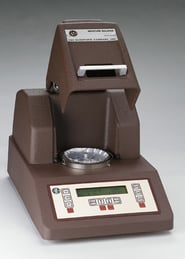 ference between water and other volatile guests. If a compound’s boiling point is at or below your test temperature, it will happily vaporize and join the measured mass loss. The result can be “moisture” numbers that are noticeably higher than the true water content—along with the risk of bad pass/fail decisions, formulation surprises, and product variability.
Food and beverage products provide classic examples. They are full of flavor compounds, residual process solvents, and naturally occurring volatiles that all want their moment in the evaporation spotlight.
Set a moisture balance to 105°C and a simple flour sample behaves nicely, giving you a reasonable measure of water. Apply that same temperature to a sample containing alcohol, aromatics, or low-boiling lipids, and you are no longer measuring moisture alone—you are measuring total volatiles. Recognizing this limitation of Loss on Drying is essential if you want a moisture method that follows sound doctrine instead of creative fiction.
How Temperature and Heating Time Influence Volatile Compound Loss
The relationship between test temperature, heating time, and volatile loss is where Loss on Drying quietly stops being “push button, get moisture” and starts behaving more like an experiment. Standard methods usually call for something in the 100°C to 130°C range, with drying times from 30 minutes to a few hours. On paper, those conditions are great for driving off water without cooking the sample. In practice, they are also a very effective invitation for volatile compounds to make their exit. How enthusiastically they leave depends on vapor pressure, boiling point, and how tightly each compound is held in the sample matrix.
Turn up the temperature and everything speeds up: water leaves faster, volatiles leave faster, and your test time looks much better—while your specificity quietly gets worse. A digital moisture balance set to 130°C will indeed deliver results more quickly than one at 105°C, which is appealing in a busy production lab. The trade-off is that anything with a boiling point up to (and sometimes beyond) that 130°C mark now contributes to the “moisture” you report.
For samples containing alcohols, light aromatics, or residual solvents, the choice between 105°C and 130°C is not a minor detail—it can shift your moisture result by 1–3 percentage points or more. On a specification sheet, that difference is the line between a controlled formulation and an uncomfortable conversation about out-of-spec product.
Heating time adds its own twist. Longer drying periods do not just “finish off the water”; they give slower‑volatilizing compounds extra time to join the mass loss. A 90‑minute run will almost always capture more total volatiles than a 30‑minute run at the same temperature. This leaves you with a familiar dilemma: shorter tests that keep production happy but may stop short of equilibrium, or longer tests that improve repeatability while increasing volatile interference and the risk of thermal damage.
Finding the right balance between speed and reliable numbers is not something the instrument can guess for you. It takes deliberate method development and validation for each material and application, usually anchored by comparison to reference methods and informed by ASTM, internal practice, or industry-specific standards.
Distinguishing True Moisture from Total Volatile Content in Your Testing
Differentiating true water content from “everything that decided to evaporate” is where Karl Fischer titration earns its place in the lab. Instead of guessing which volatiles left during heating, Karl Fischer uses a targeted chemical reaction that only reacts with water molecules and ignores the rest. The result: fast, precise moisture data that can tell water apart from alcohols, oils, and other volatiles hiding in a complex matrix.
T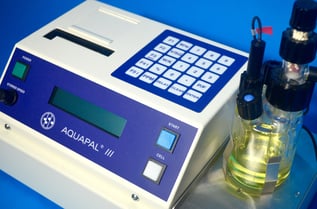 here is a trade-off, of course. Unlike LOD instruments, Karl Fischer titrators bring reagents into the process. In environments where chemicals on the bench are not an option, Karl Fischer still plays an important role—not on the line, but in the background—helping you fine‑tune and validate the LOD temperature and time settings you use in production.
Another way to outsmart the moisture/volatile problem is to move LOD into a vacuum oven. Lowering the pressure drops the effective boiling point of water, giving it a head start so it can leave the sample before the more stubborn volatiles decide to follow. For some products, this separates “water” from “everything else” just enough to give you a usable result. It does, however, come with a price: more method development, more validation, and more steps than a conventional moisture balance—proof that in moisture testing, simplicity often requires a bit of engineering.
In Summary
The concept behind Loss on Drying sounds almost charmingly simple: weigh a sample, heat it until the moisture leaves, then weigh it again and call the difference “water.” As a procedure, it is easy to explain, easy to run, and easy to automate.
It is less easy, however, to make it behave.
Because LOD cannot tell water from other volatiles, your elegant one‑step method quickly becomes a group measurement: water plus anything else that decided to evaporate at your chosen temperature and time. You can often coax a usable moisture value out of it by adjusting test temperature and drying time, but that “simple” method now depends heavily on careful parameter tuning.
This is where cross-checks earn their keep. You can compare your LOD results to actual water content from a technique such as Karl Fischer titration, or push LOD into a vacuum oven to give water a head start over higher-boiling volatiles. Either way, you are adding method development to protect a simple routine.
The widespread use of LOD across products that contain volatiles is not an accident; it is proof that, with the right parameters and validation, many labs have successfully turned a blunt tool into a practical one.
As we keep chasing down the quirks and mysteries of material measurement, the instruments have a way of surprising us just when we think we have them fully understood. If this discussion has helped demystify a bit of your own moisture testing world, feel free to pass it along to your colleagues and compare notes on what evaporates next.
Hank
P.S. Check out our Moisture measurement offerings.