

At first glance, viscosity seems pretty straightforward: it tells you how thick a liquid is, or how easily it flows. Case closed, right?
Not quite. As it turns out, viscosity likes to keep things interesting. The term actually covers several related concepts, depending on how the measurement is taken. Most of the time, when people talk about viscosity, they mean one of two things: kinematic viscosity or dynamic viscosity.
And because the internet has somehow managed to make this topic murkier than molasses, here’s my attempt to separate the two without sending anyone into a fluid mechanics spiral.
One way to measure viscosity is by looking at how much a fluid resists flowing when an outside force is applied. That’s dynamic viscosity.
The other way is to measure how a fluid resists flow under the force of gravity alone. That gives you kinematic viscosity. In other words, kinematic viscosity tells you how naturally reluctant a fluid is to move when gravity is doing all the work and no other external force is involved.
Just to keep things delightfully confusing, two fluids can share the same dynamic viscosity and still have different kinematic viscosities. Why? Because kinematic viscosity depends on the fluid’s density. Dynamic viscosity does not.
Need a Quick Density Detour?
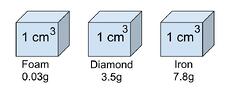
Density is simply mass divided by volume, which is the scientific way of asking, “How much stuff did you cram into that space?” Picture an ice cube and a cube of steel. Same size, very different heft. The steel cube weighs more, so we say it has a greater density than the ice cube.
A fluid’s mass, or weight, is determined by gravity. And in the kinematic method, gravity is the star of the show, the only force acting on the sample.
Measuring Dynamic Viscosity
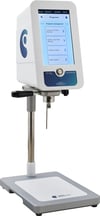
Rotational viscometers are some of the go-to tools for measuring dynamic viscosity. Their method is refreshingly straightforward: they spin a probe in the liquid and measure how much force, or torque, it takes to keep things turning. In other words, they ask the fluid, “How badly do you want to resist this?”
This makes rotational viscometers especially handy for non-Newtonian liquids, which are famous for refusing to behave the same way twice under different conditions. Some get thicker when more force is applied, while others loosen up instead. A rotational viscometer can vary the probe’s speed as it moves through the sample, then track how the liquid’s viscosity changes along with that speed, also known as shear rate.
The unit of measure for dynamic viscosity is Centipoise (cP).
Measuring Kinematic Viscosity
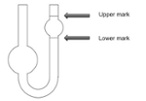
There are several ways to measure a fluid’s kinematic viscosity, but the most common is a simple race against gravity: you time how long it takes the fluid to travel through a capillary tube. That time is then converted into kinematic viscosity using a calibration constant for that specific tube.
Kinematic viscosity is measured in centistokes (cSt), which sounds a little like a tiny bird but is, in fact, a unit of measurement.
One of the biggest differences between dynamic and kinematic viscosity is density. Density is the useful middleman that lets you convert one measurement into the other. The formulas are:
Kinematic (cSt) x Density = Dynamic (cP)
Dynamic (cP) / Density = Kinematic (cSt)
So, for any sample with a density greater than one, dynamic viscosity will always come out as the larger number. Science does enjoy a pecking order.
When Should You Use Dynamic Viscosity Measurements?
You use dynamic viscosity testing when you want to find out just how much a fluid resists motion, or how much force it takes to get one layer of liquid to slide past another.
This measurement is especially useful for liquids that change their behavior the second pressure shows up. These are called non-Newtonian fluids, which is the scientific term for liquids that do not believe in being consistent under stress. Their viscosity changes as the applied force changes, and in some cases, if that force keeps up long enough, the change can become more than a passing mood.
 A classic example is ketchup, the longtime gold medalist in resisting life outside the bottle. You want it to flow easily enough to come out when dinner demands it, but once it lands on the burger, you’d prefer it not wander off like it has someplace better to be. Measuring ketchup’s viscosity at different speeds, which correspond to different levels of force, helps confirm that it’s striking the right balance.
Dynamic viscosity also matters in pump system design. Because non-Newtonian liquids can change viscosity depending on movement speed, pressure, and pump velocity, those shifts can have a major impact on selecting the proper pump, pressure, and piping size. Testing the product at different speeds helps engineers build a system that performs reliably, instead of finding out too late that the fluid had its own agenda.
When Should You Use Kinematic Viscosity Measurements?
This measurement is mostly used for Newtonian liquids, which are the rare overachievers of the fluid world: they keep the same viscosity even when the applied force changes.
A major use case is lubricating oils. By testing them this way, you can see how their viscosity changes at different temperatures and under different environmental conditions. That, in turn, helps you evaluate how well they’ll perform when it’s time to do the actual lubricating instead of just looking impressive in a container.
Other fluids well suited to the kinematic method include oil, gasoline, glycerin, and alcohol.
You can measure the viscosity of Newtonian fluids with rotational viscometers using the conversion formula above, but capillary-based instruments are usually the simpler option. In some cases, they’re also the more accurate one, which is always a nice bonus.
So if you want to understand how a liquid behaves when no outside forces are meddling and gravity is doing all the work, kinematic viscosity is your method of choice.
Summary
Newtonian fluids are the steady, dependable types. Their viscosity does not change just because you apply more force, which makes them much easier to measure. A simple capillary-type instrument, with gravity doing the heavy lifting, can usually get the job done cleanly and accurately.
Non-Newtonian fluids, on the other hand, are a bit more theatrical. Their viscosity can shift noticeably depending on how much force is applied, which means measuring them requires instruments like rotational viscometers that can track those changes over time and across different levels of stress.
So, if we boil this all down without upsetting the fluid mechanics crowd:
Dynamic Viscosity: viscosity that reflects how a non-Newtonian fluid responds when external force gets involved.
Kinematic Viscosity: the inherent viscosity of a Newtonian fluid when gravity is the main actor and outside force stays offstage.
This isn’t the last word on the subject, but hopefully it clears up the difference between dynamic and kinematic viscosity without making your brain seize up like cold syrup. If you found it helpful, feel free to share it with someone else who could use a little viscosity clarity.
Until next time,
Hank
P.S. Take a look at the infographic about the different ways to Measure Viscosity.
P.P.S. Be the first to know when we post a new blog article. Subscribe at the top of the page today!
