

In my previous missive about Loss-On drying, we discussed Vapor Pressure -- because logically it was next. As we continue to explore moisture, we learn how vital vapor pressure is when regarding the quirky issues of free and bound water.
The easy part of the loss-on drying concept is free [or unbound] water. This is water in or on the surface that will evaporate with a moisture balance.
Things get tricky when we consider bound water, which may be caught in capillaries, fibers or held onto via chemical reactions.
You may recall that when water vapor pressure is at equilibrium, nothing evaporates. When the sample is heated, the vapor pressure rises and the water will begin to evaporate -- which does a neat job of reducing the sample’s weight. This weight stops changing when all of the water is gone, allowing us to determine the amount of water via the attendant weight change.
But wait! All of the water may NOT be gone. Bound moisture -- which, it turns out, has a lower Vapor Pressure than the pure water we just removed -- did not evaporate. A paradox perhaps; we seemingly got rid of all the water but maybe did not because the bound water still remained.
 How do we know if there is any of this bound water left? The answer depends upon the test material’s hydro-characteristics. Hygroscopic materials attract water and find ways to bind the moisture while non-hygroscopic [or hydrophobic] materials keep water out of the capillaries, the fibers and the chemical reactions.
Some examples of hygroscopic are biological materials, sugar, and some engineered polymers. Hydrophobic examples are hydrocarbons, fats and lipids.
There are exotic ways to determine if and how much bound water remains. There also are intricate techniques to remove most of this residual.
Before attacking these, a question should be asked: should we care about the presence and amount of bound water?
I need a rest before dealing with these complexities, so I'm deferring further ‘enlightenment’ until another time.
Now we know that my original assumption that Loss-On-Drying 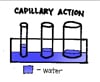 was an easy means toward moisture testing is wrong. It is further complicated by abstruse manifestations such as vapor pressure as well as moisture binding to material via chemical reactions, capillaries and fiber.
Again we find that certain things are not as simple as they might seem
Until next time I am a bewildered,
Art
P. S. Did you know that you can subscribe to these exposés, rants, raves and ramblings? All you have to do is jot your email address address in the box just to the right of the title.
To Detect & Measure Bound Moisture --- Try Karl Fischer.

